Know which mandrel is right for each application
In precision machining, workholdings are every bit as important as the cutting tool itself. Even the most accurate CNC lathe cannot produce high-quality parts if the workpiece isn’t held securely and concentrically. That’s why selecting
the right mandrel is essential for maximizing accuracy, reducing setup time, and improving surface finish.
Mandrels are designed to support or hold a workpiece from its inside diameter, allowing the outside diameter or face to be machined with excellent concentricity. Choosing the correct mandrel depends on the material, production volume, tolerance requirements, and the geometry of the part.
Solid Mandrels
Solid mandrels are the simplest option and are commonly used for finishing operations where extremely tight concentricity is required. The workpiece is slipped onto a precision-ground shaft with minimal clearance.
Best applications include:
- Finish grinding
- Precision turning
- Inspection operations
- Low-volume production
Because there are no moving components, solid mandrels provide exceptional rigidity and repeatability. However, they require parts with very consistent bore diameters and are generally limited to one specific size.
Expanding Mandrels
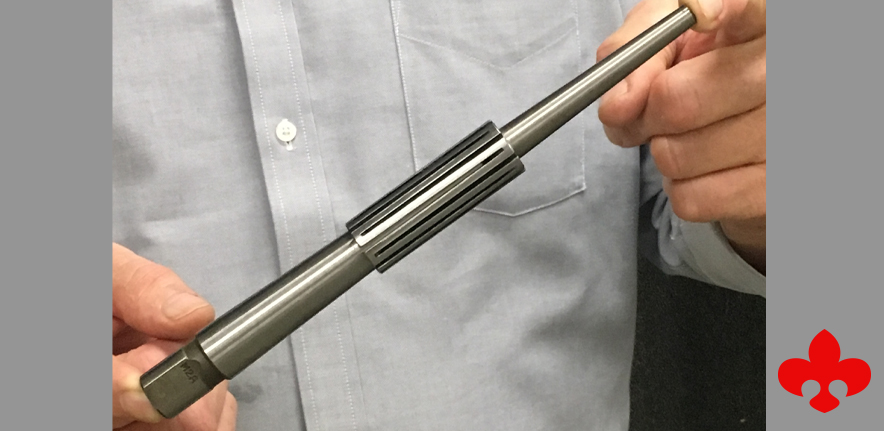
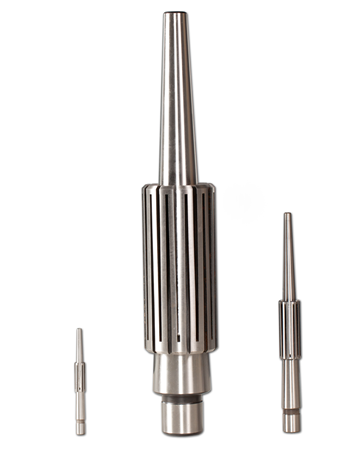
Expanding mandrels use a mechanical or hydraulic expansion mechanism to grip the inside diameter of the workpiece evenly. These are among the most versatile workholding solutions in modern machine shops.
Best applications include:
- Precision CNC turning
- Multi-operation machining
- Thin-wall components
- Medium- to high-volume production
Expanding mandrels distribute clamping force evenly around the bore, minimizing distortion while maintaining excellent concentricity. They also accommodate slight variations in bore size, making them ideal for production environments.
Taper Mandrels
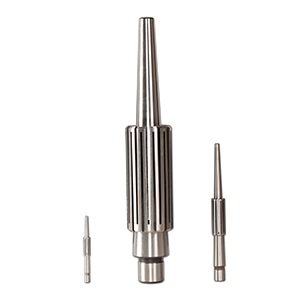
Taper mandrels rely on a slight taper to create a friction fit between the mandrel and the workpiece.
Best applications include:
- Bushings
- Bearings
- Gears
- Short production runs
These economical and easy-to-use mandrels require careful installation to minimize excessive force that occasionally distorts the workpiece. Taper Mandrels are an excellent choice when machinists want quick setups over rapid part changes.
Collet Mandrels
Collet mandrels combine the precision of collet workholding with internal gripping capabilities. The collet expands uniformly to hold the workpiece while maintaining excellent runout characteristics.
Best applications include:
- High-precision components
- Medical parts
- Aerospace components
- Swiss machining
Because the gripping force is highly concentric, collet mandrels produce outstanding surface finishes while reducing vibration during cutting.
Hydraulic Mandrels
Hydraulic mandrels use pressurized hydraulic fluid to expand a sleeve that grips the workpiece uniformly.
Best applications include:
- Ultra-precision machining
- High-value components
- Aerospace
- Automotive transmission parts
Their uniform clamping pressure minimizes part distortion and delivers exceptional repeatability. Although they represent a larger investment, hydraulic mandrels often pay for themselves in reduced scrap, longer tool life, and improved process capability.
Between-Center Mandrels
When maximum concentricity between multiple machining operations is required, between-center mandrels remain a proven solution.
Best applications include:
- Shaft components
- Gears
- Grinding operations
- Parts requiring multiple setups
By locating the part between machine centers, these mandrels maintain alignment throughout successive operations and are commonly used in precision grinding applications.
Factors to Consider Before Choosing a Mandrel
Before selecting a mandrel, evaluate these key considerations:
- Bore tolerance: Tight, consistent bores can use solid mandrels, while variable bores often benefit from expanding designs.
- Production volume: Manual setups work well for prototypes and short runs, while expanding or hydraulic mandrels improve efficiency in production.
- Wall thickness: Thin-walled parts require uniform clamping pressure to prevent distortion.
- Required concentricity: Precision applications demand workholding solutions that minimize runout.
- Material: Softer materials such as aluminum require gentler clamping than hardened steels.
- Cycle time: Fast-loading mandrels reduce setup time and improve machine utilization.
Matching the Mandrel to the Job
There is no universal mandrel that’s ideal for every application. A simple solid mandrel may deliver unmatched accuracy for a finishing operation, while an expanding mandrel may dramatically improve productivity on a CNC production line. Hydraulic systems excel when precision and repeatability are key but collet mandrels offer exceptional performance for high-tolerance components.
Selecting the right mandrel allows machinists to reduce setup time, improve part quality, extend tool life, and increase machine efficiency. By matching the workholding method to the specific demands of the application, manufacturers can consistently achieve tighter tolerances, better surface finishes, and more reliable production results.
Contact us for help selecting or finding the right mandrel