


Best practices for accurate, repeatable gun drilling on a manual lathe

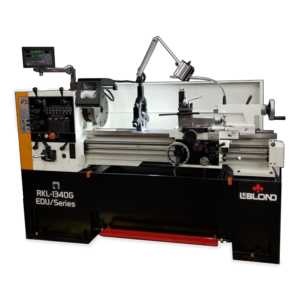
Deep-hole drilling, or gun drilling, is one of the more demanding machining operations because it requires precision, consistent chip removal, and careful control over cutting conditions. Unlike conventional drilling, gun drilling produces deep, straight holes with tight dimensional tolerances and excellent surface finishes. Experienced machinists can perform advanced gun drilling operations using a manual metalworking lathe with the right tooling, setup, and techniques.
Whether producing hydraulic components, precision shafts, firearm components, or other parts requiring deep-hole machining, following established best practices improves accuracy, extends tool life, and reduces machining problems.
- Proper Workpiece Prep
Start by securing the workpiece material firmly in the lathe chuck and verify it runs true with minimal runout. Misalignment between the workpiece and drill causes the hole to wander, creates uneven cutting forces, and compromises dimensional accuracy.
Face the workpiece and establish a reliable starting surface. For demanding applications, use a center-drilled or pilot hole to guide the gun drill during initial engagement. The pilot hole must match tooling recommendations.
- Select the Right Gun Drill
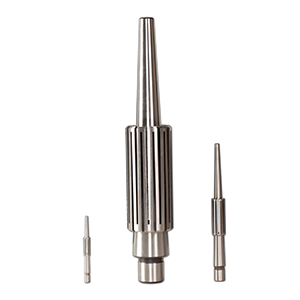
Gun drills differ from conventional twist drills because they incorporate specialized cutting geometry and internal or external coolant delivery. Single-flute gun drills typically feature a carbide cutting tip, a precision-ground shank, and a V-shaped flute that helps evacuate chips.
Select the drill based on hole diameter, depth-to-diameter ratio, workpiece material, and required surface finish. Pay particular attention to the lathe’s recommended cutting speeds, feed rates, and coolant requirements.
- Control Cutting Speeds and Feed Rates
Manual lathe operation requires machinists to establish consistent cutting conditions. Excessive speeds can generate heat and accelerate cutting-edge wear, while insufficient feed rates can cause rubbing, poor surface finishes, and premature tool failure. Use recommended starting parameters for the specific material. Calculate the speed with the formula:
RPM = (SFM x 3.82)/D
Where SFM is surface feet per minute, and D is diameter in inches.
Use the recommended feed rates per revolution rather than relying on conventional twist-drill feed tables. Monitor cutting conditions throughout the operation and adjust as needed.
- Prioritize Coolant Delivery and Chip Removal
Coolant management plays a critical role in deep-hole drilling. High-pressure coolant helps lubricate the cutting edge, control temperatures, and transport chips away from the cutting zone. Gun drilling typically produces controlled, relatively small chips. Changes in chip appearance can indicate incorrect feed, worn tooling, or material inconsistencies.
Use a coolant system compatible with the gun drill’s design. Never allow chips to accumulate inside the hole because packed material can damage the drill, increase friction, and compromise straightness.
- Monitor Alignment and Machining Progress
Unlike automated CNC operations, manual gun drilling depends heavily on operator observation. Monitor spindle behavior, cutting sounds, vibration, coolant flow, and chip formation.
Periodically inspect hole depth and dimensional accuracy using appropriate measuring instruments. Stop the operation if unusual resistance, vibration, or changes in chip formation indicate a developing problem.
Precision Depends on Preparation and Consistency
Advanced gun drilling on a manual metalworking lathe requires patience, experience, and attention to detail. Proper workholding, tooling selection, alignment, cutting parameters, and coolant delivery all contribute to successful results.
By following these best practices, machinists can achieve consistent deep-hole accuracy while protecting valuable tooling and maintaining the precision expected from demanding machining applications.
Contact your LeBlond lathe representative to find the right setup for your deep hole drilling project, view our machines, select your parts online here.