


Stay Balanced
Lathe Spindle Balancing is Key for Best Performance
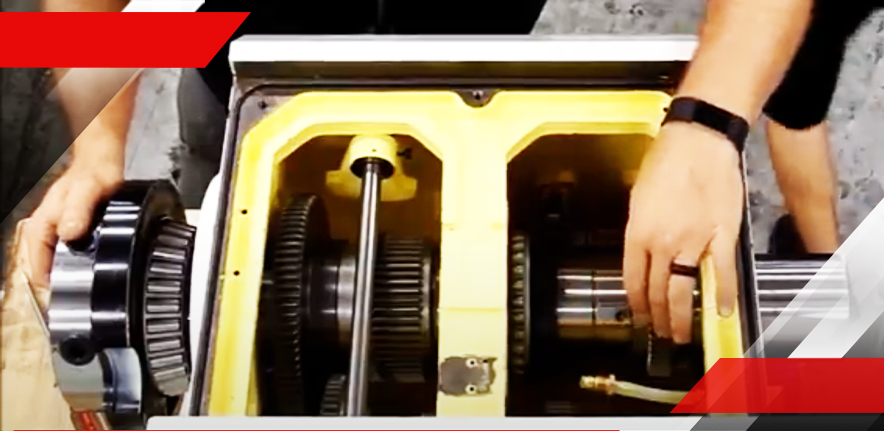
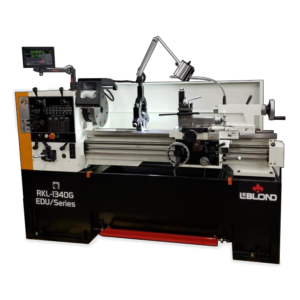
An experienced lathe operator maintains the conditions that keep a spindle assembly balanced and identifies problems early enough to hire a qualified technician or balancing service to correct them. Maintaining a dynamically balanced spindle is critical to achieving consistent machining performance, particularly at higher spindle speeds. Dynamic balancing ensures that the rotating spindle assembly operates with minimal vibration and centrifugal force.
Key Benefits of a Dynamically Balanced Spindle
- Improved Surface Finish
An unbalanced spindle creates vibration and harmonic patterns that transfer directly to the workpiece. A balanced spindle produces smoother rotation, helping the machine achieve more consistent surface finishes.
- Longer Tool Life
Spindle imbalance creates additional vibration at the tool-workpiece interface. This vibration accelerates cutting-edge wear, chipping, and premature tool failure. A balanced spindle allows cutting tools to operate under more stable conditions.
- Better Dimensional Accuracy
Vibration can cause the tool to deflect or move slightly during cutting. Maintaining spindle balance improves repeatability and dimensional consistency, especially for tight-tolerance components.
- Reduced Chatter
Spindle imbalance is a common contributor to unwanted vibration and chatter. Dynamic balancing reduces one source of vibration, allowing the cutting system to operate more smoothly.
- Longer Spindle Bearing Life
An unbalanced rotating assembly generates additional radial forces that place unnecessary loads on spindle bearings. Proper balancing reduces these forces and can extend the life of bearings and spindle components.
- Higher-Speed Machining Capability
As spindle RPM increases, even a relatively small imbalance can generate significant centrifugal force. A dynamically balanced spindle becomes increasingly important for high-speed milling, turning, grinding, and other precision machining applications.
- Reduced Heat Generation
Excessive vibration and bearing loads can contribute to friction and heat. A properly balanced spindle can operate more efficiently, helping maintain more stable operating temperatures.
- Lower Machine Wear and Maintenance Costs
Vibration doesn’t stop at the spindle. It can affect toolholders, bearings, drive components, and other machine elements. Controlling spindle imbalance can reduce unnecessary mechanical stress throughout the machine.
Why Dynamic Balance Matters
A spindle that appears perfectly balanced when stationary can still experience imbalance while rotating. Dynamic balancing evaluates the rotating assembly at operating conditions, identifying both the amount of imbalance and its location.
For machine shops, maintaining spindle balance is particularly important when running high RPMs, using long or heavy toolholders, performing precision machining, or experiencing unexplained vibration, chatter, surface-finish deterioration, or shortened tool life. A dynamically balanced spindle helps a machine run smoother, cut more accurately, protect expensive components, and produce more consistent parts.
How a Lathe Operator Maintains Spindle Balance
- Keep the chuck and workholding clean
- Remove chips, dirt, rust, and debris from the spindle nose, chuck register, and mounting surfaces.
- Clean the chuck backplate and spindle mounting surfaces during routine maintenance.
- Inspect the chuck and backplate
- Look for damage, wear, burrs, or distorted mounting surfaces.
- Check that the chuck seats properly against the spindle register.
- Use properly balanced workholding
- Ensure chucks, collet systems, faceplates, and other workholding components are appropriate for the intended spindle speed.
- Operate under the defined maximum RPM specifications.
- Balance heavy or unusual workholding configurations before high-speed operation.
- Mount workpieces accurately
- Center the workpiece properly and minimize unnecessary eccentricity.
- When practical, machine workpieces so their mass is distributed as evenly as possible around the spindle axis.
- Avoid running significantly out-of-round work at unnecessarily high RPM.
- Balance soft jaws when appropriate
- Large amounts of material removed from soft jaws can create an imbalance.
- Maintain reasonably symmetrical jaw geometry when machining soft jaws.
- Consider the balance condition of the complete chuck-and-jaw assembly for high-speed application.
- Check toolholders and tooling
- Inspect toolholders, boring bars, live tooling, and other rotating accessories for damage.
- Remove chips and debris from mating surfaces.
- Do not operate damaged or bent tooling at high spindle speeds.
- Avoid exceeding recommended RPM
- Centrifugal forces increase rapidly as spindle speed increases.
- A component running acceptably at 1,000 RPM may produce substantial vibration at 3,000 RPM.
- Always stay within the rated speed of the spindle, chuck, jaws, tooling, and workholding system.
- Pay attention to new vibration
A lathe operator should investigate changes such as:- Increased spindle vibration
- New or worsening chatter
- Changes in surface finish
- Unusual spindle noise
- Increased bearing temperature
- Tool life decreasing unexpectedly
- Workpiece runout changing
- Vibration that increases significantly with RPM
- Check spindle runout periodically
Use a calibrated indicator and appropriate test bar or precision reference to monitor spindle runout according to the machine’s procedure. A change from the machine’s established baseline indicates a problem with the spindle, bearings, spindle nose, chuck, or mounting surfaces. - Don’t try to “fix” imbalance with random counterweights
If a spindle, chuck, or workholding assembly is genuinely dynamically out of balance, the correction should be performed using the appropriate balancing procedure and equipment. Adding weights without proper measurement can worsen the condition and create a safety hazard.
A Good Operator Maintenance Routine
An experienced operator thinks about spindle balance in three ways:
Every setup
Clean the spindle/chuck interfaces, inspect workholding, verify proper seating, and assure the workpiece is secure and reasonably concentric.
Periodically
Check spindle runout, inspect the chuck and backplate, monitor spindle noise and temperature, and compare performance against the machine’s normal baseline.
When something changes
Stop and investigate unusual vibration, chatter, noise, heat, or runout rather than simply reducing cutting parameters to compensate.
The important distinction
Cleaning, inspection, proper setup, and runout checks maintain spindle balance. Actual dynamic spindle balancing requires specialized balancing equipment and should generally be performed by a qualified machine-tool technician or spindle service provider.
Contact LeBlond if you suspect your lathe’s spindle is out of balance. Our service team can help evaluate the root cause and offer a solution.