

Don’t Get Haunted by Flawed Lathe Practices
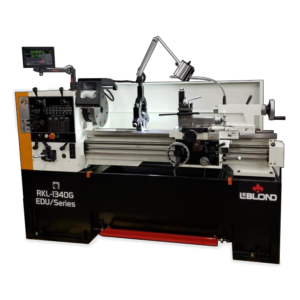
Even the most experienced machinist can be haunted by ghosts of poor performance — chatter marks that refuse to vanish, overheated tools that wear out too soon, or parts that just won’t meet spec. In the spirit of Halloween, think of your lathe as Frankenstein’s laboratory: a place where precision, power, and control bring metal to life. But just like the good doctor’s experiment, the difference between success and disaster comes down to how well you control the process — in this case, your feeds, speeds, and depth of cut.
Every machinist knows that the right combination of these three elements determines whether a part comes out perfect or becomes scrap. Because different metals respond uniquely to heat and force, fine-tuning each variable is essential for accuracy, surface finish, and tool longevity.
Balance is key when machining mild steel. Run 150–300 RPM with HSS tools or 600–900 RPM with carbide inserts for a 2-inch diameter workpiece. Feed rates between 0.004″–0.008″ per revolution and a depth of cut of 0.050″–0.100″ will maintain stability and chip control.
Avoid the curse of work hardening by slowing down for stainless steel. A 2-inch diameter part typically runs at 140–200 RPM, or up to 350 RPM with carbide. Maintain steady feed pressure and use plenty of coolant to mitigate excess heat.
When cutting aluminum, you can awaken true speed. A 2-inch bar can run at 1,500–2,400 RPM with carbide tooling. Keep feeds light (0.004″–0.010″ per rev) and use sharp, polished inserts with cutting oil or mist to prevent chip welding.
For titanium and nickel-based superalloys, tread carefully — these metals are notorious monsters for tool wear. Keep speeds slow (120–200 RPM) and depth of cut light, while using flood coolant to keep heat under control.
Ultimately, setting the right parameters isn’t black magic — it’s experience, observation, and fine-tuning. Listen for the right sound, watch your chip shape, and trust your instincts. When your feeds, speeds, and depth align, the results will be anything but frightening.