


Best Practices to Cut Tool Overhang
Controlling tool overhang is a common challenge machinists address when turning metal parts on a lathe. Excessive overhang introduces several problems affecting the machining process and final product. What solutions do machinists have to fix the resulting issues? Manufacturers can improve efficiency, accuracy, and tool life by understanding the key issues caused by tool overhang and applying practical solutions.
1. Cut the Chatter and Deflection
The first and most noticeable problem caused by excessive tool overhang is deflection and vibration, often referred to as chatter. A tool extending too far from its holder loses rigidity, making it more susceptible to bending under cutting loads. This instability leads to chatter, poor dimensional accuracy, and shortened tool life. To combat this, machinists should minimize overhang whenever possible, use larger-diameter shanks for stiffness, and rely on carbide or solid toolholders rather than less rigid materials. Adjusting cutting speeds and depths of cut also helps reduce deflection forces.
2. Are You Finished?
Surface finish degradation isanother issue arising from overhang. Chatter and vibration leave behind wavy marks and rough textures that compromise the quality of the part. Improving the finish requires more than just shortening tool stick-out—it also involves selecting sharper tools with proper geometry, such as inserts with positive rake angles. Anti-vibration boring bars make a significant difference for internal machining. Additionally, optimizing feeds and speeds to avoid resonant frequencies helps maintain smooth and consistent finishes. Correct resonant frequencies by increasing or decreasing turning or feed speeds to move away from natural frequencies.
3. Don’t Overextend Yourself
Excess tool extension also contributes to uneven tool wear and even breakage. Because the cutting edge is forced into unstable conditions, the wear tends to concentrate in localized spots, leading to faster deterioration or chipped inserts. Preventing this damage requires not only shortening the overhang but also ensuring both the toolholder and workpiece are rigidly clamped. Using high-quality inserts designed for stability and applying proper cutting fluids to reduce heat and friction further extend tool life.

4. Take It to Another Dimension
Dimensional accuracy is another area affected by tool overhang. Deflection during cutting often causes undersized diameters or tapered cuts, creating issues that can compromise the part’s function. Experienced machinists reduce depth of cut and take multiple lighter passes rather than forcing a single heavy cut when long overhang is unavoidable. Careful monitoring of tool offsets and regular dimension verification during finishing passes helps maintain accuracy, even under suboptimal conditions.
5. Be Supportive When You’re Boring
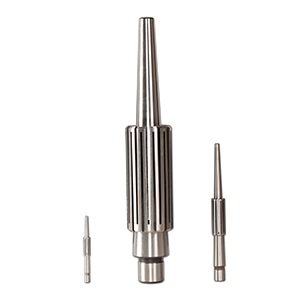
Finally, boring operations highlight the overhang problem more than almost any other type of machining. Deep hole boring requires significant stick-out, which magnifies issues of vibration, finish, and accuracy. The best solution is to use the largest possible boring bar diameter relative to the hole size, following the general rule of maintaining a diameter-to-length ratio of 1:4 or better. When deeper cuts are necessary, tuned anti-vibration boring bars can provide stability. Additionally, the use of steady rests or tailstock support can minimize tool deflection.
While tool overhang is sometimes unavoidable, understanding the impact and applying best practices greatly reduces the potential risks. By carefully managing tool rigidity, optimizing cutting parameters, and using the right support systems, manufacturers ensure their lathe operations remain efficient, accurate, and cost-effective.